


21st May 2026
The Shark Frenzy Paradox: Why We Choose the Bloody Water
In my last post, I talked about paradigm resistance — the deeply human tendency to cling to what's familiar even when the evidence against it is staring us right in the face. I want to go deeper on that now, because I've been thinking about it from a slightly different angle. Not just why we resist change, but why we seem to actively run toward the dangerous, crowded, compromised spaces when something genuinely better is sitting right over there, wide open, practically waving at us.
There's a concept in business strategy called "blue ocean" versus "red ocean."  The red ocean is where everyone's already swimming — it's crowded, brutally competitive, and the water is bloody because the feeding frenzy never stops. The blue ocean is open water. Uncontested. Room to breathe, room to grow, room to actually thrive. You'd think the choice would be obvious. And yet, overwhelmingly, most people keep diving headfirst into the red.
Why? Why do we do this? I've been sitting with that question for a while now, and I think the answer runs deeper than laziness or ignorance. It's woven into our psychology in some pretty fundamental ways. I must confess, I have some degree of authority on such subjects because I am a Certified Archetypal Pattern Analyst, educated in a Jungian Depth Psychology institute and I’ve made an in-depth, near lifelong study of human behaviour and consciousness.
The Comfort of Consensus
Psychologists call it social proof — the cognitive shortcut that tells our brains, "if everyone's doing it, it must be right." There were some pretty eye-opening conformity experiments done back in the mid-twentieth century — I'm thinking of work around group pressure and perception — where researchers found that people will deny the plain evidence of their own eyes rather than contradict the group consensus. They asked participants to compare line lengths, embarrassingly simple stuff, and found that a significant portion of them would give the wrong answer just because everyone else in the room gave it first. That sounds like real stupidity, but it’s not exactly that. Instead, it’s a deeply wired survival mechanism. For most of human history, going with the group was how you stayed alive. The herd wasn't always right, but breaking from it was dangerous. Often, the loner who wandered off got eaten. The one who stayed with the group usually didn't. 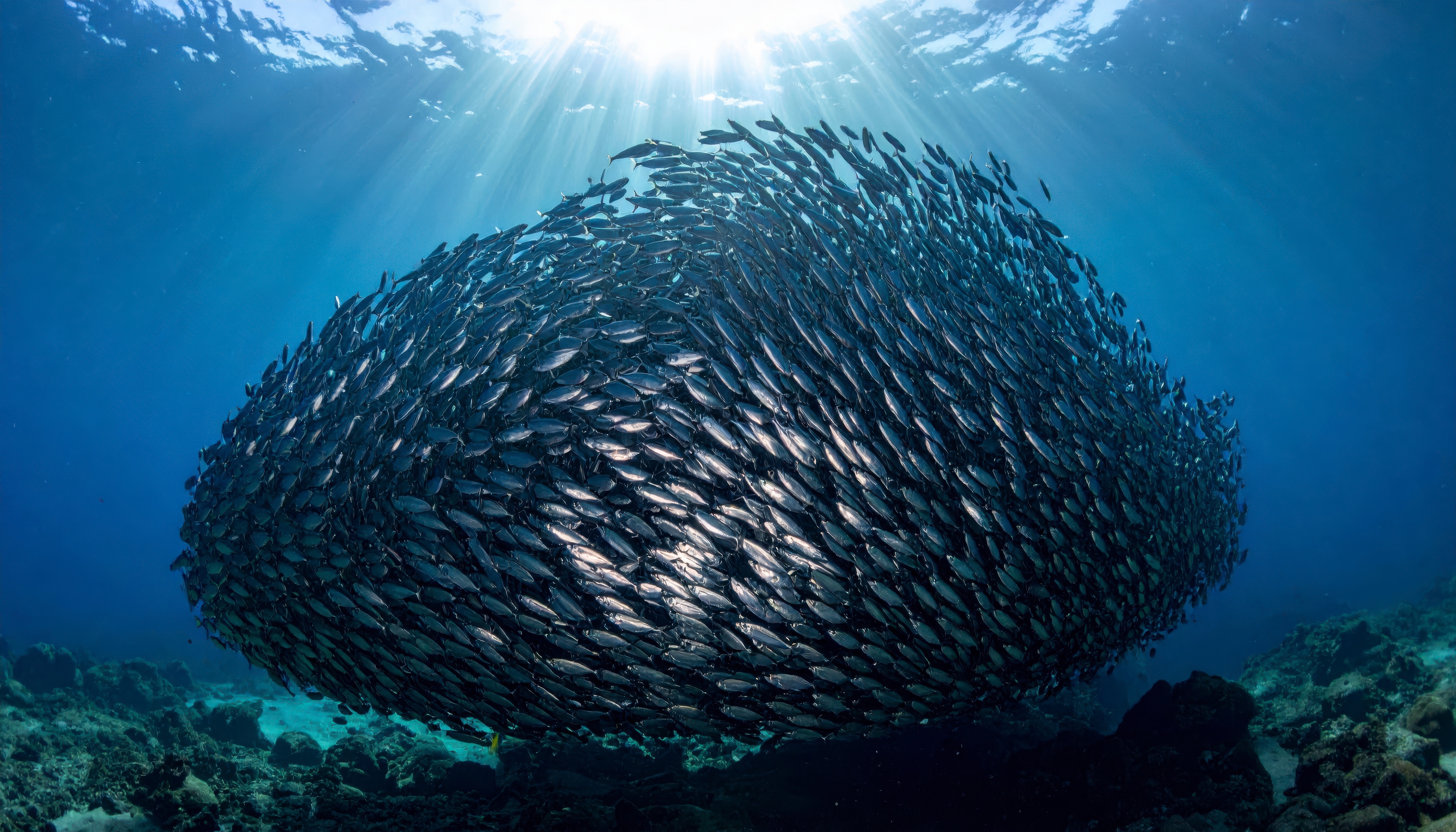 We see that with schools of fish, balling-up in the thousands to reduce the statitical chance of getting swallowed. Not that fish calculate statistics, but instinct drives such behavior, you know - the “safety in numbers” concept. So, evolution rewarded conformity. The problem is we're still running that ancient software in a world that no longer requires it — and in fact, in many modern contexts, it actively works against us. The herd today isn't a group of hunter-gatherers navigating a savanna. It's millions of consumers being herded by massive marketing budgets toward products and choices that serve corporate interests, not theirs. The "predator" isn't a lion anymore. It's a board of directors with a planned obsolescence strategy! Really, the masses need to wake up to the realities we are so often blind to.
The Illusion of Safety in Numbers
There's a related phenomenon psychologists talk about, around concept sometimes called “diffusion of responsibility”, and it bleeds into something I'd call diffusion of consequence. When we make a choice that everyone else is making, we feel insulated from the negative outcomes. We’ve all done it, and I referenced food choices in my previous blog, you know what I mean, the little voice in our head that says, ”How bad can it be? Everyone uses this stuff." The shared nature of the poor choice somehow makes it feel like less of a mistake, or at least less our mistake. I remember thinking that way about food, honestly. Years ago, if you ate what was in the grocery store — the normal stuff, the stuff everyone bought — it didn't feel like you were poisoning yourself. It felt somehow conforting and familiar. I can tell you, the grocery store thrill of buying all the tastey but guilty pleasures is a big one for me. When we are young, the repercussions are hidden, when we get older well then, they become more obvious and the cost to our health and wellbeing becomes more obvious. Back then (and even now to a lesser degree) the accountability was invisible because the harm was slow and dispersed and nobody was pointing a finger at you specifically. You were just one fish in a very large school. This is exactly how toxic industries survive. Not by deceiving everyone at once — that's too obvious. But by making sure their product is the default. The thing on every shelf. The thing your father used and his father before him. Once something is the default, it doesn't have to justify itself anymore. The burden of proof shifts entirely to the challenger, the maverick, the aware one. For example, you’re in the grocery store shopping with your partner, you are aware that a specific food is not a smart choice and your partner tells you to knock it off, “why are you so suddenly so health conscious, just buy it, you know you want it, and your’re going to eat some other junk anyway”. Now that’s something I can attest to first hand! Oh brother, it’s these little things that really add up over time.
Familiarity Isn't the Same as Safety 
There's a well-documented effect in psychology — I believe it came out of research on emotion and cognition somewhere in the latter half of the last century — around what's sometimes called the simple or mere exposure effect. The basic finding is that people develop preferences for things simply because they've encountered them before. Repeated exposure creates a sense of comfort and even affinity, completely independent of whether the thing is actually good for you. Think about what that means in a marketplace context. A brand that has been on shelves for 40 years doesn't need to be better than its competitors. It just needs to have been there. You've walked past it a thousand times. You saw it in your grandfather's workshop. It's familiar; and familiarity, in the absence of critical thought, masquerades as trustworthiness. The coatings industry runs on this. The big-box store shelf is a masterclass in the mere exposure effect. Same brands, same basic chemistry dressed up in new cans with new graphics every few years, projected forward on the momentum of familiarity alone. Nobody's asking hard questions in that aisle; they’re just grabbing what they recognize. Repeating the same old pattern, even if it’s a new choice of brand, they still reach for the same old failed coating paradigm.
Loss Aversion, Commitment Bias, and the Fear of Letting Go
There’s a bias towards loss aversion. Once we make an investment of sorts whether it be financial, reputational, a relationship, or some learned behavior, we don’t want to let it go even when it’s detrimental to us or doesn’t serve growth. There was research done on this, as I recall in the field of behavioral economics, and it eventually won a Nobel Prize if I'm not mistaken, around the finding that humans feel the pain of a loss roughly twice as intensely as they feel the pleasure of an equivalent gain. This asymmetry has enormous implications for behavior. For example, when someone has been using a particular product or method for years — maybe decades — they've built up a psychological investment in it. They've recommended it to friends. They've staked some portion of their professional identity on it. Switching doesn't just mean choosing something new; it means, on some level, admitting that the old way was wrong. We here at Odie’s Oil see this every day, especially among artisan woodworkers and flooring contractors. I am sorry to call them out specifically but I simply have to because they simply don’t seem to realize or want to admit the extent at which their being stuck in familiar so called choices is hurting them, their businesses, and their families and customers. So, getting back to the psychology if this, the brain treats change as a loss even when it’s for the good. Like breaking up from a toxic relationship. The brain perceives the change as a real loss even when it’s actually a gain. Add to that the “sunk cost” fallacy — the very human tendency to over-weigh past investment when making future decisions — and you have a powerful cocktail of inertia that keeps you stuck in the same situation. "I've used poly for 30 years, I know how it behaves, I know what to expect." Yes. And you know it yellows and peels and fills your lungs with VOCs while you're applying it! But the known bad thing often beats the unknown good thing because at least you've already paid the emotional entry fee on the known one, right? For the love of God, try, try, and try again to get out of that stuck mode, build a habit of challenging the status quo when it doesn’t serve your overall wellness and success.
Hidden Manipulation, The Manufactured Landscape
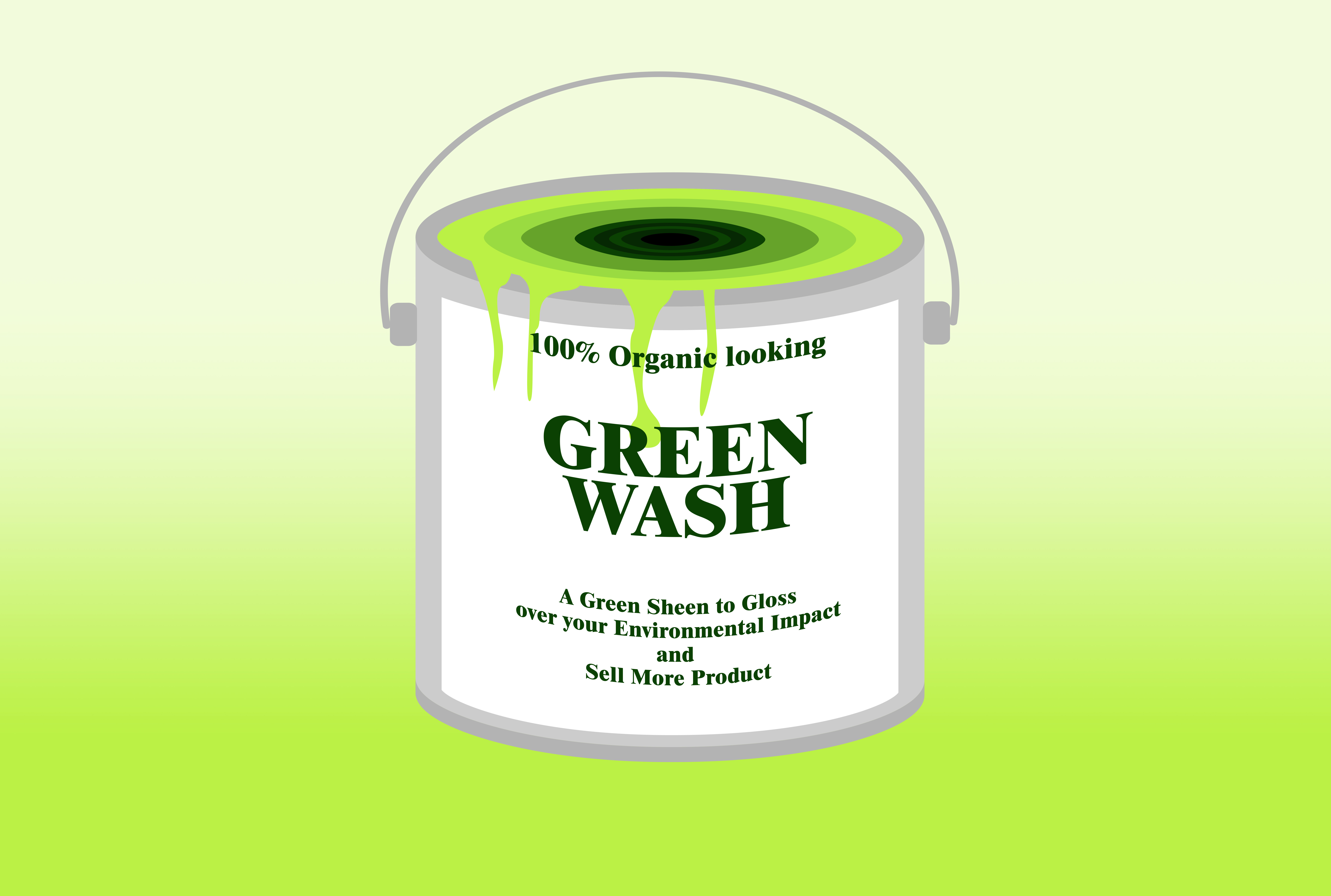 None of this is entirely organic, by the way. These psychological tendencies are real, but they're also actively exploited. Major manufacturers spend enormous resources making sure their products are the default choice — in stores, in trade schools, in trade associations, in false green-washing NGO shemes, in architectural spec sheets, in the memory of every woodworker who learned their craft in a shop that used their product. This is what I'd call the manufactured landscape of consumer choice. You're not actually choosing freely when you grab the familiar can off the shelf. You're navigating a field that has been deliberately shaped to funnel you in that direction. The display placement, the ubiquity in every store or supply house, the brand relationships with influencers, the product endorsements embedded in trade education — it's an ecosystem engineered to perpetuate itself. Blue ocean alternatives don't just have to be better. They have to be better enough to overcome all of that engineered blind-consensus. And even when they are, most people never even look in their direction because the herd's gravitational pull is so strong.
What It Actually Takes to Change
I'm not going to end this by pointing at a miracle cure for what binds us mentally, that’s a process that an Archetypal Pattern Analyst or a really good shrink or a truly aware mentor can help with. Breaking the herd pattern takes something specific: a genuine moment of cognitive dissonance that can't be explained away. For me it was watching my brother treat a plank of wood and seeing a result that didn't fit my mental model of how finishing was supposed to work. That dissonance opened a crack. And once you look through the crack, you can't fully un-see it. For other people it's a health scare that finally makes them question the food they’ve been shoving down their throats for decades. Or a financial disaster that makes them question the market trend. Or a project that fails in a familiar way for the fifth time in a row (what comes to mind for me is always restaurant tables and bartops whose coatings are breaking down). Something has to make the cost of not questioning higher than the psychological cost of questioning. There's a concept in psychology around what happens when incoming information doesn't fit your existing mental framework — when the framework itself has to be revised rather than the information just dismissed. In pattern analysis and the science of transformation we call it reorientation to the field, a realignment. At first, it’s uncomfortable. It's supposed to be. A perturbing influence is intentionally applied (or a traumatic event takes place in life) for the purpose of resetting the system. That discomfort is the sensation of growth, and it can sometimes be quite painful because it usually doesn’t happen in a vacuum. The question I keep coming back to is this: does it really have to take a disaster? Can awareness itself be enough? Can understanding why we're drawn to the shark-infested water make us willing to at least look toward the open ocean? I genuinely believe the answer is yes. But it requires the one thing the herd mentality is specifically designed to suppress: the willingness to stop, look around, and ask whether the crowd you're following actually knows where it's going.

Blog post written by Michael Tinghitella, Director of Sales and Odie's Copywriter