



10th Jun 2026
A Herd of Turkeys
You Don’t Want to Be a Turkey Now, Do You?
There's a turkey at the Odie's Oil factory that has become something of a mascot — though not by choice. 
Every morning, almost without fail, this bird comes strutting across the lot, locks eyes with its own reflection in the big plate glass windows, and charges. Full speed. There's a loud, hollow thud, blood splatter, a brief stagger, a shake of the wattled head — and then, after a moment of dazed recovery, the turkey walks it off and comes back to do it again.
Same window. Same reflection. Same outcome. We finally added a bobcat picture as a deterrent - seems to be working.
We've watched this bird repeat this ritual dozens of times. It never learns. It never will. And honestly? At first, it's funny. Then it gets a little sad. Then you realize you've seen this behavior somewhere else — not in the field, but in the hardware aisle.
Meet the Human Version
 Walk into any big-box home improvement store on a Saturday morning and you'll find them: well-meaning homeowners loading their carts with cans of polyurethane varnish. They've done it before. They'll do it again. The finish will look great for about a year, maybe two if they're lucky, and then — right on schedule — it will start to peel, crack, bubble, or go gray.
The front door is always the first casualty. Followed closely by the deck.
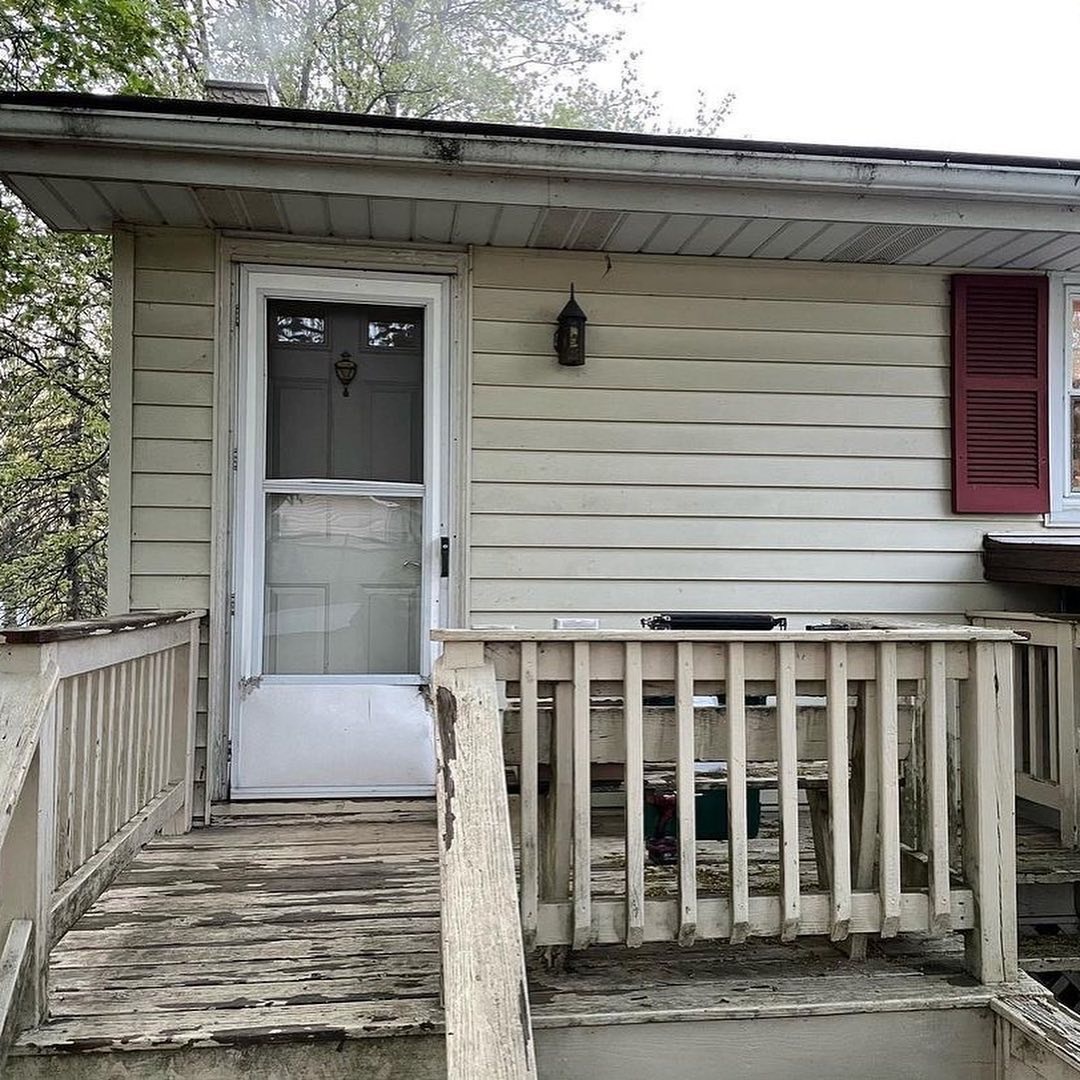 They'll spend a weekend (or three) with toxic chemical strippers, solvent, sanders, wire brushes and a gamut of other stripping tools just to remove the old finish down to raw wood, cursing the whole time. They'll breathe the fumes and the poison dust. They'll get it on their hands, their clothes, their lungs. They'll sand. Prime. Coat. Wait. Coat again. Clean the brushes with chemical solvents that require their own disposal protocols.
And when it starts peeling again in eighteen months, they'll go right back to the store and do it all over.
Thud. Stagger. Repeat. And maybe have an allergic reaction.
The Poison Nobody Talks About (Loudly Enough)
Let's be honest about what's actually in the can. Conventional oil-based polyurethane contains volatile organic compounds — VOCs — , a gamut of health and life altering forever chemicals, toxins that off-gas during application and for days afterward. Many of these compounds are classified as hazardous air pollutants by the EPA. Prolonged exposure has been linked to liver damage, central nervous system effects, and respiratory problems. The Safety Data Sheets for most varnish products read like a pharmaceutical disclaimer at 2x speed.
And yet, year after year, people slap this stuff on surfaces their children touch, their pets walk on, their bare feet press against on warm mornings. Why?
Because the can is familiar. Because it's on the shelf. Because that's what you use. 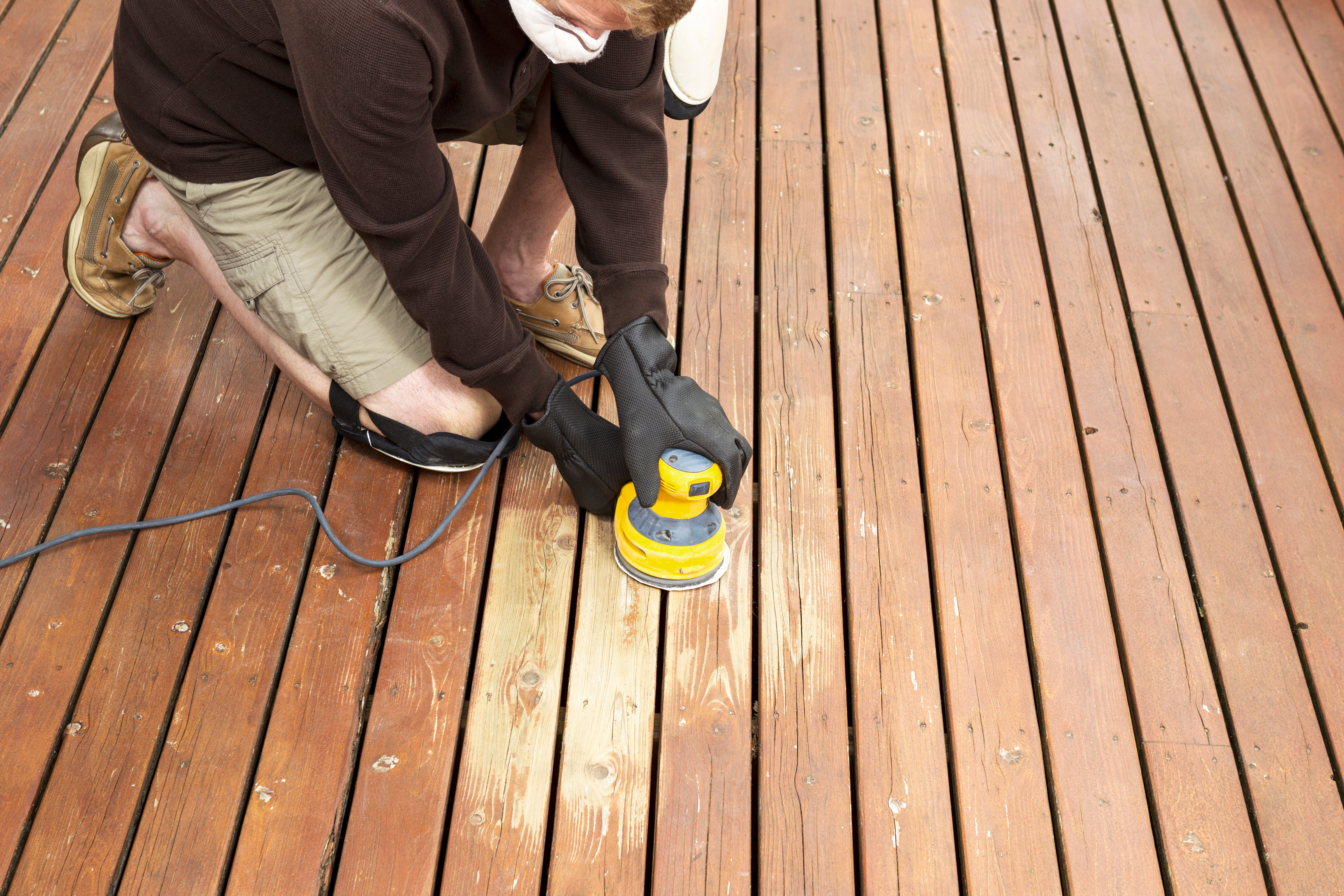
Corporate Propaganda Has a Long Memory
The polyurethane finish industry spent decades and untold marketing dollars convincing the American consumer — and the American contractor — that "durable" means "hard" and "hard" means "plastic coating." They funded the trade publications. They sponsored the home improvement shows. They trained the hardware store staff. The message was simple, repeated, and effective: wood needs to be sealed behind a hard shell, like a bug in amber.
What they conveniently left out: polyurethane is not amber and neither is varnish. Wood isn’t a dead ancient bug either. Wood breathes, moves, expands, contracts with humidity and temperature. A hard, inflexible film coating on top of a living, moving substrate is — by the laws of physics — eventually going to crack. The only question is when, and it isn’t very long in terms of your work and expense! The industry knows this. They've always known this. But planned obsolescence is a feature, not a bug. If your finish lasts fifteen years, you buy one can. If it fails in two, you buy eight. 
Do the math. Then ask yourself - who benefits?
The Herd Instinct Is Real, and It's Being Exploited
Humans are deeply, profoundly social animals. We look to others for behavioral cues, especially under conditions of uncertainty. Psychologists call it "social proof." Marketers call it a goldmine.
When you walk down a paint aisle and 80% of the products are polyurethane-based, the implicit message is: this is what people use. When your neighbor uses it. When your father used it. When every YouTube tutorial defaults to it — you use it too. Not because you've evaluated the alternatives. Because the herd is moving in that direction and standing still feels riskier than running with everyone else. This is not stupidity. This is a deeply wired survival mechanism being exploited by companies with marketing budgets larger than most countries' GDPs.
But here's where it tips from understandable into something harder to excuse - people keep doing it even after it fails them. Repeatedly. Expensively. Physically.
The diabetic who keeps eating carb-laden snacks and candy knows what's happening. The smoker who lights up outside the oncologist's office knows what's happening. The homeowner who grabs another can of polyurethane, three years after the last can peeled off their front door like a sunburn — they know too.
Habit is comfortable, no matter how foolish and detrimental. Change requires admitting the last decision was wrong. And the ego, it turns out, is more durable than most varnishes.
What Does the Alternative Actually Look Like?
Here's where we get practical because this isn't just a philosophy lecture.
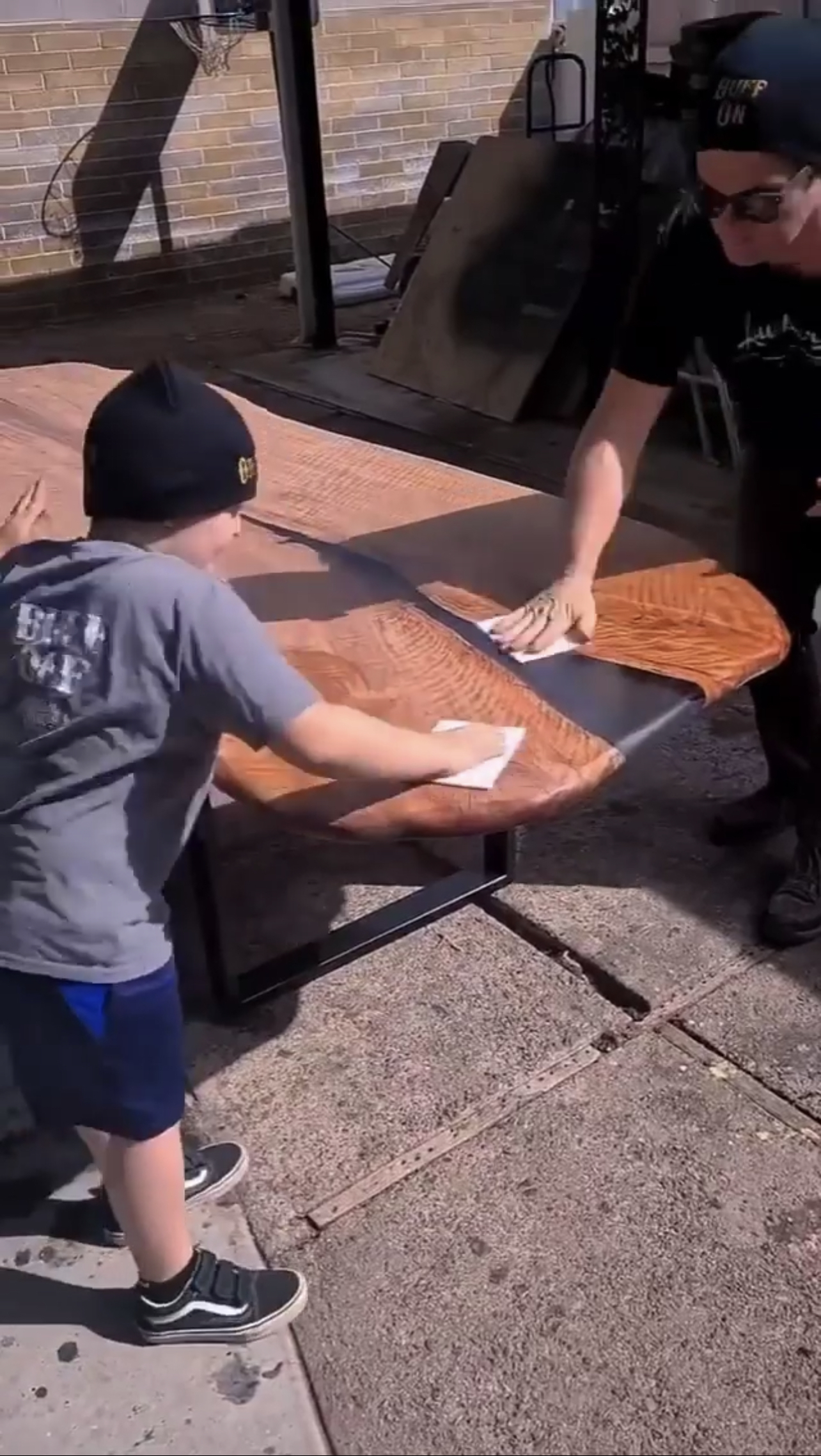 Penetrating oil finishes — the kind Odie's Oil and Mr. Cornwall's products represent — work with wood rather than against it. Instead of building a film on top of the surface, they penetrate into the grain, curing within the wood fibers themselves. The wood can still breathe and move. There's no film to crack, peel, or delaminate. When a penetrating oil finish eventually wears, it doesn’t peel off or flake, it just looks a little tired. You don't strip it. You don't sand to bare wood. You don't rent equipment or breathe chemical fumes for a weekend. You clean the surface and massage in fresh oil. It’s that simple, and actually quite a pleasant experience. It smells good, and is a pleasing intimate interaction between you and the wood surface, with the Odie’s finish serving as the “liaison”. It’s fulfilling to see the result – a totally refreshed and renewed surface. In many cases, that's a Saturday afternoon if not simply a few minutes to an hour, not a Saturday of suffering.
The finish that comes from a jar of Odie's Oil products contain bio-based oils and waxes — not a cocktail of petroleum derivatives and isocyanate-linked resins. The environmental and personal health profile is not even a close comparison. And the result? Wood that looks like wood. Not wood wrapped in plastic. Not wood behind glass. Wood that you can feel, that patinas naturally, that gets more beautiful with age rather than more brittle. A finish that far outlasts any plastic coating. But that's a harder thing to put in a thirty-second ad than the empty promises of film forming finishes like poly, varnish, or new-fangled “hard-wax oils” that require a part-two catalyst, what we here at Odie’s correctly call “wipe-on polys”.
Why This Matters Beyond Your Door or Deck
This is not a small thing.
Millions of homeowners apply film-forming coatings every year. The aggregate VOC emissions are significant. The waste — stripper chemicals, sanding dust contaminated with old finish, solvent-soaked rags that create a disposal problem — is enormous. The labor hours spent on removal and reapplication are staggering.
And for what? A finish that the industry has already decided you'll have to replace.
Meanwhile, better technology has existed for years. European and Asian woodworking and finishing culture used penetrating oil systems centuries ago, but unfortunately, the new versions offered are cheaply made hybrids, isocyanate laced, thin-film polyurethanes disguised and marketed as “hard-wax oils”, a term designed to mislead consumers. Scandinavian furniture makers, German cabinetmakers, Dutch flooring manufacturers — they've been using these products as standard practice in recent years. American consumers were, in many cases, the last to adopt them, but adopt them they have in part. Not because the products are superior, but because the marketing infrastructure for the old way (the plastic coatings) is so deeply entrenched that it was easy for finish companies to apply them to the new face of finishes and continue the deception with great redundancy across brands. Most of which are all from the same raw material suppliers, nearly the same products across brands with different labels and a slight twist in formulation. In contrast, Odie’s Oil finishes are completely different; we favor truth over deception, real results for users over expedient profiteering.
Stop Running Into the Window
The turkey at the factory is not going to change. It doesn't have the cognitive architecture for that kind of self-reflection. We should probably feel a little sorry for it. You, however, are reading this sentence. That alone puts you ahead.

The next time your front door finish starts to peel, or your deck looks like the surface of a dead planet, or you're standing in a respirator mask holding a heat gun, poison laced stripper, or a sander at 7am on what was supposed to be a relaxing weekend — stop. Before you reach for the same can you've been reaching for since you can remember, ask whether the product is serving you, or whether you've been serving the product and its marketers. Protect yourself, and your investment in wood, time, effort, and money. Do something that serves you instead. Reach for Odie’s.
The herd is heading toward the window again.
You don't have to go with them.
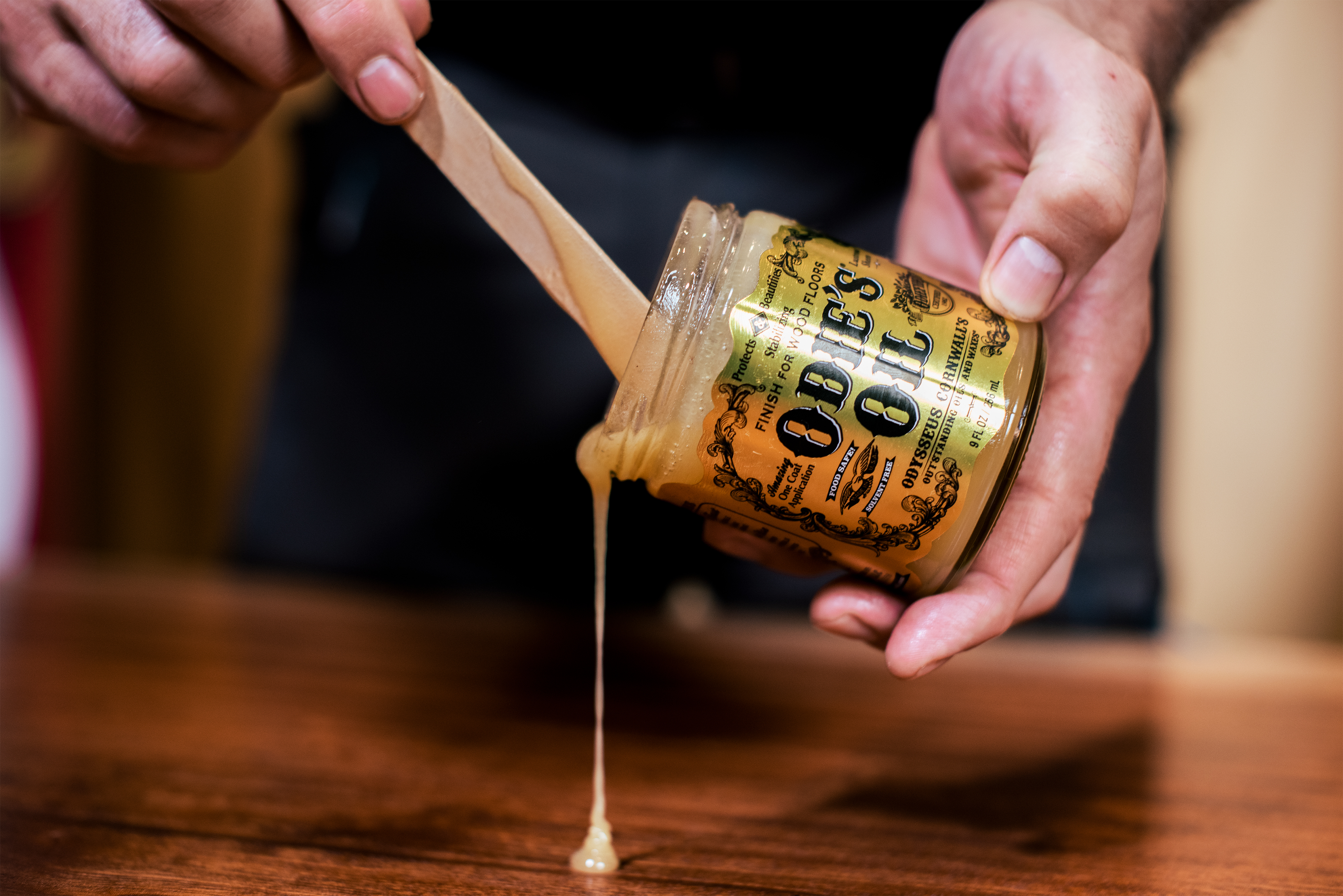
Odie's Oil and Mr. Cornwall's finishing products are available at www.OdiesOil.com/finishes/ . If you've been doing it the hard way and want to know what the easy way actually looks like, we'd love to show you.
Posted with strong opinions and no apologies. Comments welcome — especially from people who disagree.
Blog post written by Michael Tinghitella, Director of Sales and Odie's Copywriter